
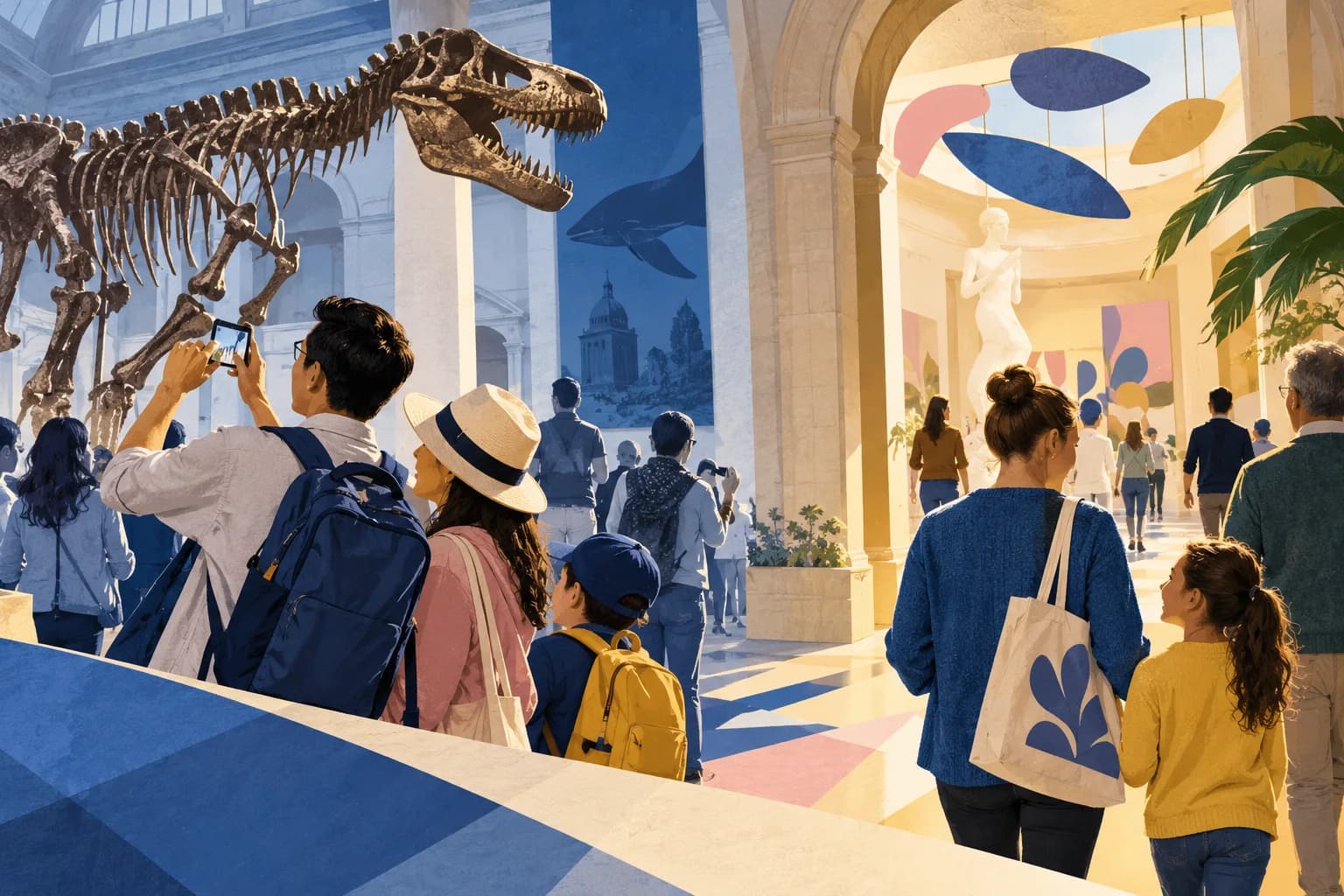
The Institution That Counts Everyone and Knows No One
Museums and attractions are unusually good at counting. Gate systems produce exact admissions, timed tickets produce arrival curves, and annual reports quote visitation to the single visitor. What the numbers hide is that the institution usually cannot contact any of those people. The ticketing platform holds the purchaser email, often under its own terms, and walk-ups, group entries, and second adults in a family booking produce nothing at all.
Meanwhile nearly every one of those visitors carries a phone, and many will look for WiFi, especially international tourists avoiding roaming charges and families settling in for a long visit. The network you already run for operational reasons is an untapped contact channel.
The Segmentation That Matters: Tourists Versus Locals
Attraction audiences split into two populations with almost opposite economics, and WiFi session history is the cleanest way to tell them apart without asking a single survey question.
Put this guide to work
Free worksheets, campaign templates and a venue growth calculator. No email gate.
Tourists visit once, this trip. Their device appears one day and never again. They are not retention prospects, but they are three other things: same-trip prospects for your other programming or partner attractions, review sources at scale, and, for institutions with national or international pull, a next-trip audience for major exhibition announcements.
Locals are the institution's future. A device that reappears across weeks or months belongs to someone in your catchment area who chooses to keep coming back, exactly the profile every membership and development department spends money trying to find. The mechanics of spotting them are the same as any repeat visit tracking setup: the pattern identifies them automatically.
The strategic point: a single email list treated as one audience wastes both groups. Segmented, each one funds a different institutional goal.
The Membership Conversion Engine
For most attractions, membership is the conversion that matters most. Members tend to visit more and spend in the cafe and shop, and your own membership data will tell you how well they renew. Many institutions sell membership passively: a leaflet at the desk, a line on the ticketing page.
WiFi data makes the pitch behavioral. Illustration: a visitor has connected on three separate days in four months. At an assumed 20 dollar adult admission, they have spent 60 dollars. If your membership is 75 dollars, they are one visit from beating the gate price, and they may not know it. An email to that group saying exactly that arithmetic in one sentence, with a join link, is an honest upsell: it usually saves the visitor money. In VoqadoWiFi you would send it as a campaign to the Regulars or Returning segment; for a true per-visit trigger, sync to Mailchimp on Growth and build it there.
Illustration, with every number assumed: suppose your institution sees 200,000 annual visitors, 15 percent of them locals, and your portal captures 35 percent of local visitors over a year, roughly 10,500 local contacts. If the email converts 3 percent of them to a 75 dollar membership, that is around 23,600 dollars of membership revenue, before renewal years, cafe spend, or donations. Adapt the assumptions to your own gate in the ROI calculator.
Programming Fill Without Ad Spend
Attractions run a constant calendar: lates, lectures, workshops, school-holiday programming, temporary exhibitions. Filling that calendar with paid social is expensive, and the targeting is guesswork.
The WiFi list is the opposite of guesswork. Everyone on it has already paid to be in your building.
- Exhibition launches go to the full list, tourists included, because a strong show is a reason for a second trip and a forwardable email for their friends back home.
- Evening events and lates go to locals, filtered by the session data that shows they visit without children on weekdays, a decent proxy for the audience that attends lates.
- Family programming goes to weekend and school-holiday visitors, whose connection timestamps identify them cleanly.
One practical note on capture design: attractions serve families, so run the consent flow with an age gate and never enroll minors. Keep the form to name and email with an unticked marketing checkbox; the compliance overview covers the consent record-keeping a public institution should expect to demonstrate.
Reviews and the Discovery Loop
For attractions, reviews are acquisition infrastructure: tourists often choose what to do from a map search. Google says local results are based mainly on relevance, distance and prominence, and that more reviews and positive ratings can help local ranking (Google's own help page). Review automation turns your daily visitor flow into a steady review stream: the email request goes 3 hours after connection by default (never between 21:00 and 09:00 venue time), landing late in the visit or shortly after exit. Every guest gets the same public Google review link, whatever they rate, and a private note to the venue is offered in addition, never instead. Requests go to guests who agreed to hear from you by email, once guest email is switched on at your venue; VoqadoWiFi is turning email on venue by venue. For an institution, the private notes become visitor services intelligence: accessibility issues, wayfinding confusion, queue pain. The review automation guide has the full flow, and the Google Business Profile piece covers the ranking mechanics.
Infrastructure Reality Check
Large-footprint venues raise coverage questions that a cafe never faces: stone walls, atriums, outdoor sculpture gardens. TP-Link Omada and Ubiquiti UniFi both offer centralized controllers, multi-AP roaming, and outdoor units, and the portal rides on top of whichever you run; setup is covered in the Omada guide and the UniFi guide. You do not need building-wide coverage to start. The entrance hall, the cafe, and the main galleries are where visitors stop and look at their phones, and the cafe, where people sit longest, is a sensible pilot.
The free Starter plan (500 guest logins a month) suits a pilot in a single space. Growth covers 5,000 logins a month; an attraction at the volume in the example above would pass that, so talk to us about Enterprise. Limits are soft and guests are never cut off.
The Institutional Case
Every argument in this piece reduces to one sentence: the institution already pays to attract every one of these visitors, and a portal is the difference between renting that audience once and owning it. For development directors, it is a pipeline. For marketing, it is a channel with no per-send cost. For visitor services, it is a private feedback stream. Start a pilot in the cafe this month, or contact us and bring your ticketing and membership teams into the conversation.
Get the free Guest WiFi Growth Kit
A diagnostic worksheet, signage copy guests can follow, a campaign brief and a monthly scorecard. Yours to print and share with your team.
Share this article