
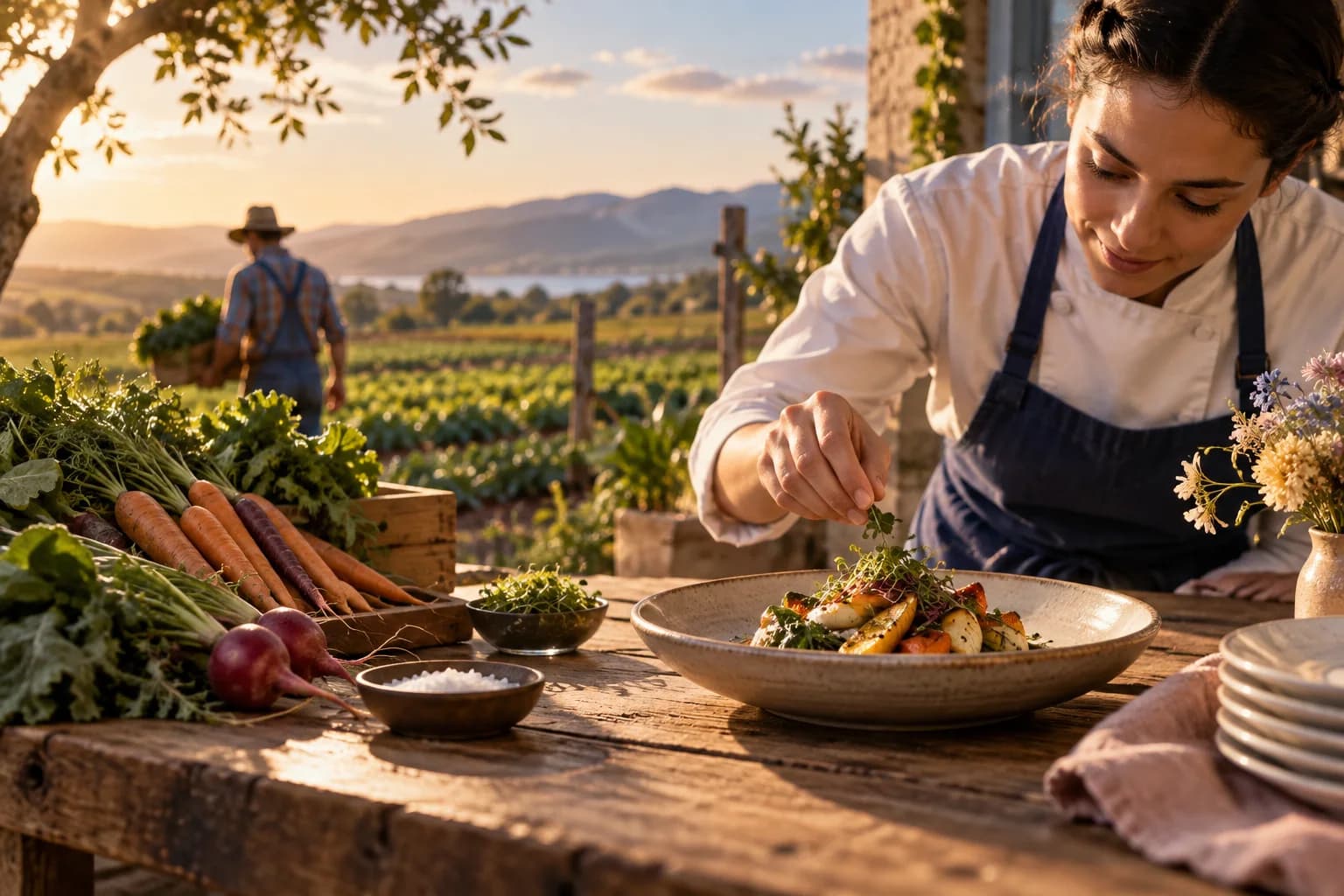
The restaurant industry is full of buzzwords that fade, but farm to table has stuck around for decades. Done honestly, it can set a restaurant apart. Done as a menu slogan, it can backfire badly.
This guide covers what farm to table means, where it came from, how to move a restaurant toward it, and the costs and trade offs to plan for.
What Does Farm to Table Mean?
Your kitchen already relies on farm produce, from potatoes to steaks, so it might seem that farm to table simply describes food that travels from farm to plate. The idea is more specific than that.
Put this guide to work
Free worksheets, campaign templates and a venue growth calculator. No email gate.
Farm to table has no strict legal definition. Unlike terms such as "organic", which in many countries can only be used by certified producers, farm to table is a broad, informal concept. Despite that, or perhaps because of it, it has captured the imagination of restaurateurs and diners alike.
At its heart, it means sourcing ingredients as directly as possible from local farms, ranches, fisheries and other producers, supporting regional agriculture, and serving fresher, often seasonal food. The goal is a more direct connection between producers and diners, with more transparency about where food comes from.
Working directly with producers lets restaurants cut out some intermediaries, reduce food miles and know exactly how ingredients were grown or raised. Note that local does not automatically mean organic or pesticide free; if those things matter to your guests, ask your suppliers and describe them accurately.
Many diners care where their food comes from, and farm to table has become both a set of practices and a marketing message. That is exactly why it needs to be genuine.
The Origins of the Farm to Table Movement
It is hard to pinpoint exactly when the movement began, but it grew alongside other movements that challenged industrial food production. In the United States, Alice Waters' restaurant Chez Panisse, which opened in Berkeley, California in 1971, is widely credited with championing local, seasonal ingredients bought directly from farmers. The organic and natural food movements gained momentum in the decades that followed. In Italy, Carlo Petrini founded the movement that became Slow Food in 1986, in opposition to fast food, advocating local, seasonal, high quality ingredients and traditional food culture.
In 2012, Sacramento, California declared itself "America's Farm to Fork Capital", a sign of how central local agriculture had become to modern dining. At its core, farm to table holds that quality, flavor and sustainability are connected, and it encourages diners to eat food that is ethically sourced, locally produced and in tune with the seasons.
Be Honest About Your Sourcing
Because farm to table has no legal definition, it is open to abuse. In 2016, a Tampa Bay Times investigation titled "Farm to Fable" found restaurants advertising local produce and seafood that were nothing of the sort. Misleading menu claims damage trust and can breach consumer protection and advertising rules. Name farms only when you actually buy from them, update your menu when suppliers change, and be specific rather than vague.
How to Transition Your Restaurant to a Farm to Table Model
The transition changes how your restaurant buys, cooks and prices, so most restaurants do it gradually: one or two ingredients from a local producer first, then more as the relationships prove reliable. Here are the steps.
1. Reduce Reliance on Commercial Middlemen
A core principle is cutting out commercial middlemen, such as large wholesalers and distributors, where you can. They are efficient and often cheaper, but they do not always offer the freshest ingredients. Buying directly from local producers gives you fresher ingredients and fewer food miles.
The switch is not easy for restaurants with established supplier relationships, and many keep a wholesaler for staples such as flour, oil and dry goods. That is a sensible compromise, as long as your menu does not imply everything is local.
2. Build Strong Relationships with Local Producers
Lasting relationships with local farmers, ranchers, fishers and other producers are central. They provide a steady supply of fresh ingredients and build a sense of community between the restaurant and the people who grow its food. Producers' expertise can shape your menu and make the dining experience unique.
Share these stories with guests. Today's diners want to know where their food comes from and appreciate knowing it was grown or raised by local producers they can trust.
3. Embrace Flexibility and Adaptability
Farm to table requires flexibility that traditional kitchens may lack. Without a wholesaler's predictable supply, you need to adapt to the seasons and to what your suppliers actually have, which means changing menus more often.
That can challenge a kitchen used to a fixed menu. Plan for it: keep a core of dishes that use reliable ingredients, and let specials carry whatever the farm has that week.
4. Redesign Your Menu to Reflect Farm to Table Values
Bringing farm to table onto your menu is about the story of where the food comes from, as much as the ingredients. Redesign your menu around the seasons and describe local ingredients specifically. Instead of "grilled vegetables", write "grilled seasonal vegetables from [Local Farm Name]". It highlights freshness and quality and helps guests feel connected to their food.
Consider a "Meet the Farmers" section on your menu or website showcasing your producers. It deepens the connection and builds loyalty.
5. Rethink Pricing and Time Management
Local, sustainably sourced ingredients usually cost more than mass produced alternatives, so you will need to adjust prices. Some guests will pay more for food they know the origin of, and some will not. Test price changes on a few dishes first, and explain on the menu what the guest is paying for.
Operations must adapt too. Fresh local ingredients often have a short shelf life, so inventory management changes, and reducing waste by using every part of an ingredient becomes essential to protect margins.
Is Farm to Table Here to Stay?
It has lasted more than fifty years since Chez Panisse opened, which is longer than most food trends. Local sourcing is now a familiar feature of casual dining, and naming producers on a menu no longer surprises anyone.
That familiarity cuts both ways. Guests are more likely to notice a vague or inflated claim, and investigations like "Farm to Fable" showed what happens when one is exposed. The restaurants that do well with it are specific: they name the farm, say what they buy from it, and change the menu when that changes.
Tell Your Sourcing Story to Every Guest
Your producers and seasonal menus give you great stories, and email is a direct way to share them: a note when the first local strawberries arrive, or an invitation to a dinner with your farmers. Guest WiFi helps you build that list. VoqadoWiFi gives your restaurant a branded WiFi login on TP-Link Omada or Ubiquiti UniFi that collects guest emails, with an optional email signup that starts unticked. Growth adds Mailchimp sync, and email campaigns to opted in guests once campaigns go live. Starter is free forever for one location and 500 guest logins a month. Create a free account or explore WiFi marketing for restaurants.
Get the free Guest WiFi Growth Kit
A diagnostic worksheet, signage copy guests can follow, a campaign brief and a monthly scorecard. Yours to print and share with your team.
Share this article